
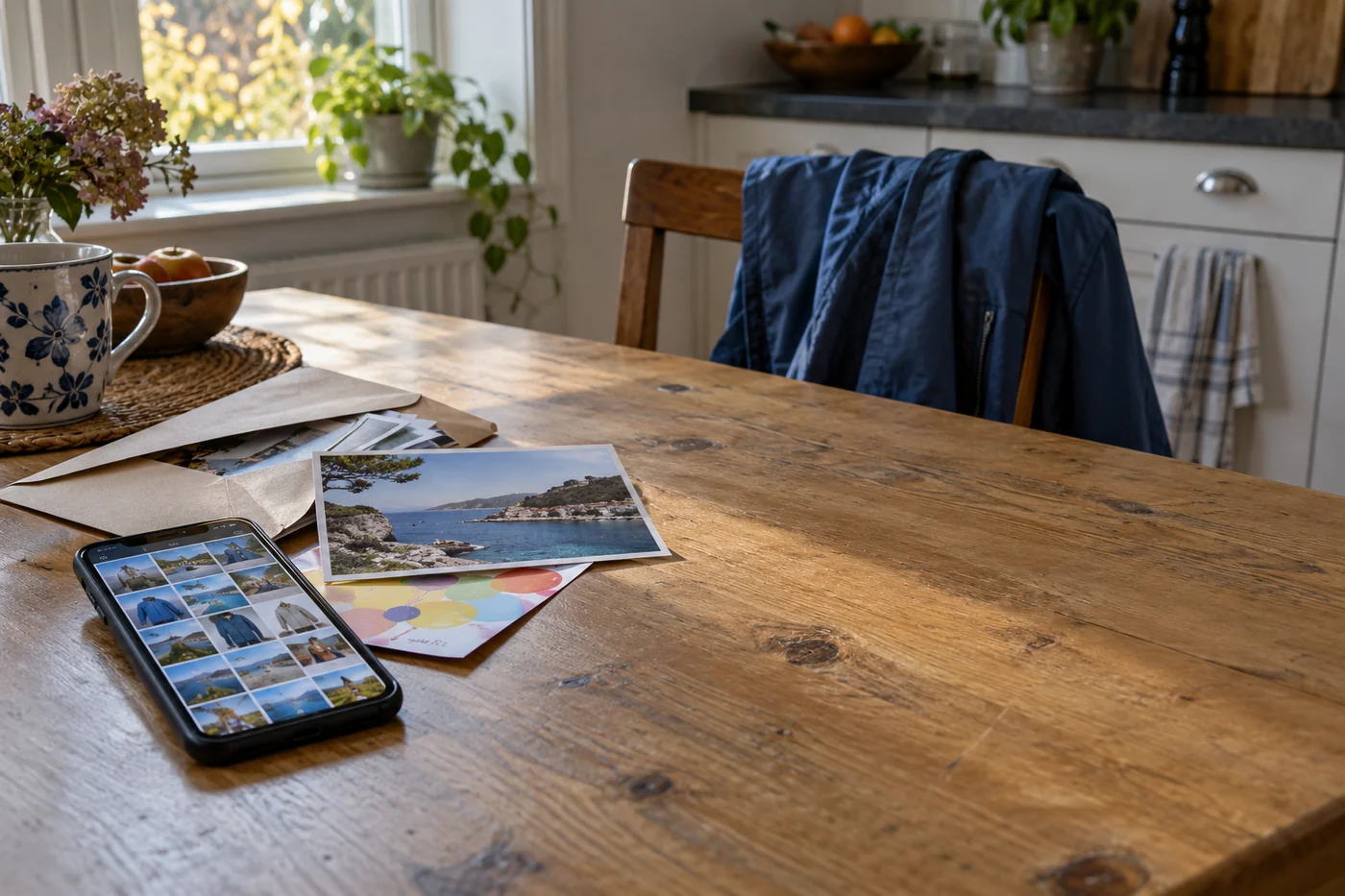
What Dazzle is offering
Dazzle separates its offer into help with recent images and ideas drawn from photo history. Its launch announcement describes extracting events from flyers, finding products and arranging repairs. It also describes recommendations based on inferred interests, such as restaurants and travel. These are advertised capabilities, not evidence that every task will finish correctly.
The company offers an iOS app, text-based interaction and a web surface for more involved planning. The announcement asks readers to request an invite. It says people can allow the full photo library, select particular photos or decline library access entirely. Starting with a few chosen images is therefore part of the stated offer, not a workaround readers have to invent.
For a first try, I would choose something low-stakes whose answer I can recognize: ideas for an afternoon out, for example. I would not begin by asking an unfamiliar assistant to buy something or book a service. Whether it understands a photograph and whether it should spend money are separate decisions.
The early hands-on found both useful ideas and missed context
TechCrunch’s Marina Temkin tried Dazzle and reported that its activity suggestions felt more personal than those from a generic assistant. She liked ideas including a nearby pottery studio and a bioluminescent kayak tour. That is an encouraging account from one person, not a measured result for everyone who uses the app.
The same report describes gaps. Vacation suggestions included Sicily, where Temkin had already been four years earlier. When she asked about roller skates as a birthday gift, Dazzle failed to remember that her daughter already knew how to skate. Neither example establishes a general failure rate. They do show how an assistant can offer plausible personalized advice while missing a fact the person considers basic.
A repeat destination is not automatically a bad recommendation; plenty of people want to return. The problem is not knowing whether the assistant understood the earlier trip. ‘You have been here before—would you like to go back?’ is a different conversation from presenting it as a discovery.
Correct the meaning, not just the next answer
Camera rolls mix interests with errands, references and accidents. A restaurant menu may record a meal you disliked. A screenshot may be an example of what you want to avoid. Photos of a birthday party do not tell an assistant who planned it, whose tastes it reflected or whether you want to repeat it. These are ordinary ambiguities, not findings from a Dazzle test.
I would want to tap the image behind a suggestion and say ‘This was for someone else’ or ‘I do not like this.’ That correction should change later suggestions, too. Otherwise the person becomes responsible for repeatedly arguing with the same old photograph. The sources reviewed here do not establish whether Dazzle currently offers that exact correction path; it is a usability test I would put ahead of asking for more photo access.
There should also be room to change. Someone who photographed ski holidays years ago may now want quiet, inexpensive weekends close to home. Good personalization can use history without treating it as a permanent description of the person.
Photo permission does not settle every privacy question
Dazzle says it excludes photos it suspects are sensitive and does not use private information to train public AI models, target third-party advertising or sell personal data. It also says its assistant works through its own accounts and tools rather than broadly taking over a user’s digital identity. Those are company commitments, not independent security findings.
The privacy policy available when we checked on October 6 is headed ‘Dazzle AI Developer Preview’ and carries a May 15, 2026 effective date. It says selected media may be shared with service providers and AI partners for processing. It also says account deletion removes data from active databases, while encrypted backups may retain it for a limited period. The launch announcement’s privacy promises should be read alongside that older, preview-labelled policy; readers should confirm which terms apply to the version they are joining.
Choosing a few images limits what you initially hand over. It does not, by itself, tell you which inferred preferences remain after you remove a photo or revoke library access. Before expanding access, ask how to inspect, correct and delete those inferences. Do not assume a sensitive-photo filter can recognize everything you would personally keep private.
Try one wrong assumption before handing over more
If you receive access, begin with a small set of non-sensitive pictures. Ask for one useful suggestion, then deliberately correct an assumption: the jacket belongs to someone else, the destination is a place you do not want to revisit, or the activity no longer interests you. On a later request, see whether that correction held. This is a suggested personal trial, not a test we have run on Dazzle.
I would be happy to keep an assistant that finds a good afternoon plan from a few pictures. If I have to keep telling it that a borrowed jacket is not mine, I would leave the rest of the library closed.