

Agents are starting to touch real systems
Google DeepMind's latest writing on agent security is useful because it does not ask everyone to trust the model harder. It treats the agent as an actor inside a system, with sandboxes, monitoring, permission boundaries, prompt-injection resistance, and escalation paths around it.
That framing matters. The moment software can call tools, move data, or act across accounts, the product is no longer just the model. The product is the environment that decides what the model can do and what happens after it tries.
The problem gets stranger when agents interact
MIT Technology Review's coverage of DeepMind-backed multi-agent research points at the next layer. One agent failing is a bug. Thousands or millions of agents interacting starts to look like an environment with its own weather.
You cannot understand that only by testing one model in isolation. You need traces, simulations, limits, and boring governance primitives that still work when agents are tired, overconfident, misled by a page, or optimizing the wrong thing.
The pause is part of the product
For builders, the practical lesson is blunt: the wrapper matters. Memory, tools, auth, queues, approvals, logs, recovery, and cost controls are not plumbing if the agent is allowed to act. They are the difference between a useful operator and a cleanup job.
This is also where the market language should change. Thin 'AI agent platform' copy blurs together. Stronger products answer concrete operator questions: what can the agent access, what can it break, what gets logged, when does a human step in, and what proves the work happened correctly?
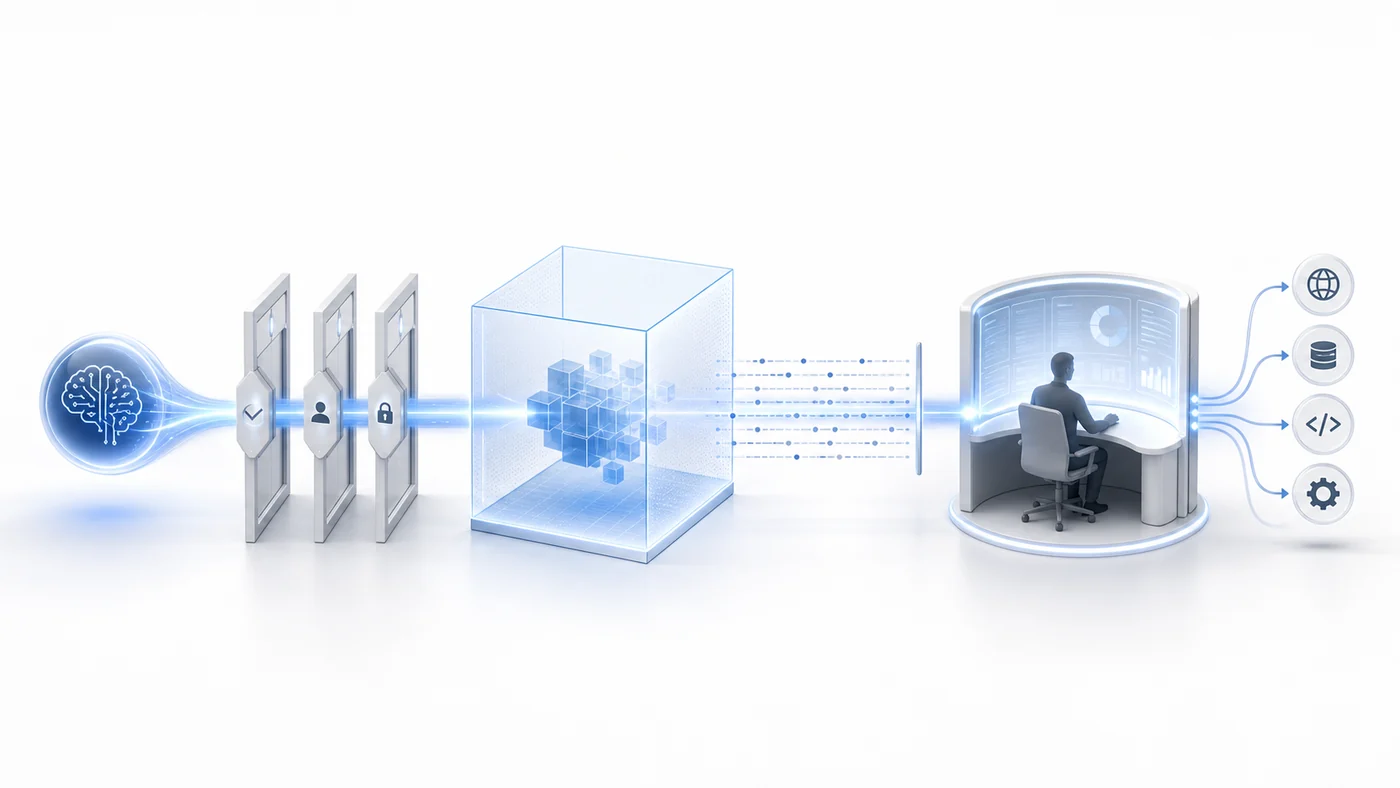
What a serious agent page should answer
The best agent products will probably feel less like magic shows and more like control rooms. That does not mean ugly enterprise software. It means the interface gives people enough evidence to trust useful autonomy without pretending mistakes disappear.
Gartner's current agentic AI framing is still full of hype-cycle language, but the underlying buyer question is practical. If an agent can take consequential action, someone will ask where the brakes are. The companies with a good answer will sound different from the companies still selling demos.