
The human shape is a marketing advantage
Humanoid robots photograph well. We understand the promise immediately because the body explains it: this machine might go where people go and use the tools people already use. Stairs, door handles and workbenches were built around us. Arms and hands can be a sensible shortcut into that world.
But the full body carries costs. Two-legged balance is difficult. A tall machine has farther to fall. Legs take power and control effort even when the job happens at one bench all day. A face-shaped head can make a machine approachable, but it does not help turn a valve or move a carton.
WAIC put that tradeoff in plain view. Chosun Daily reported that many companies showed upper-body robots mounted at workstations rather than complete walking humanoids. That is not a lesser robot. It may be a company dropping the expensive part the job does not require.
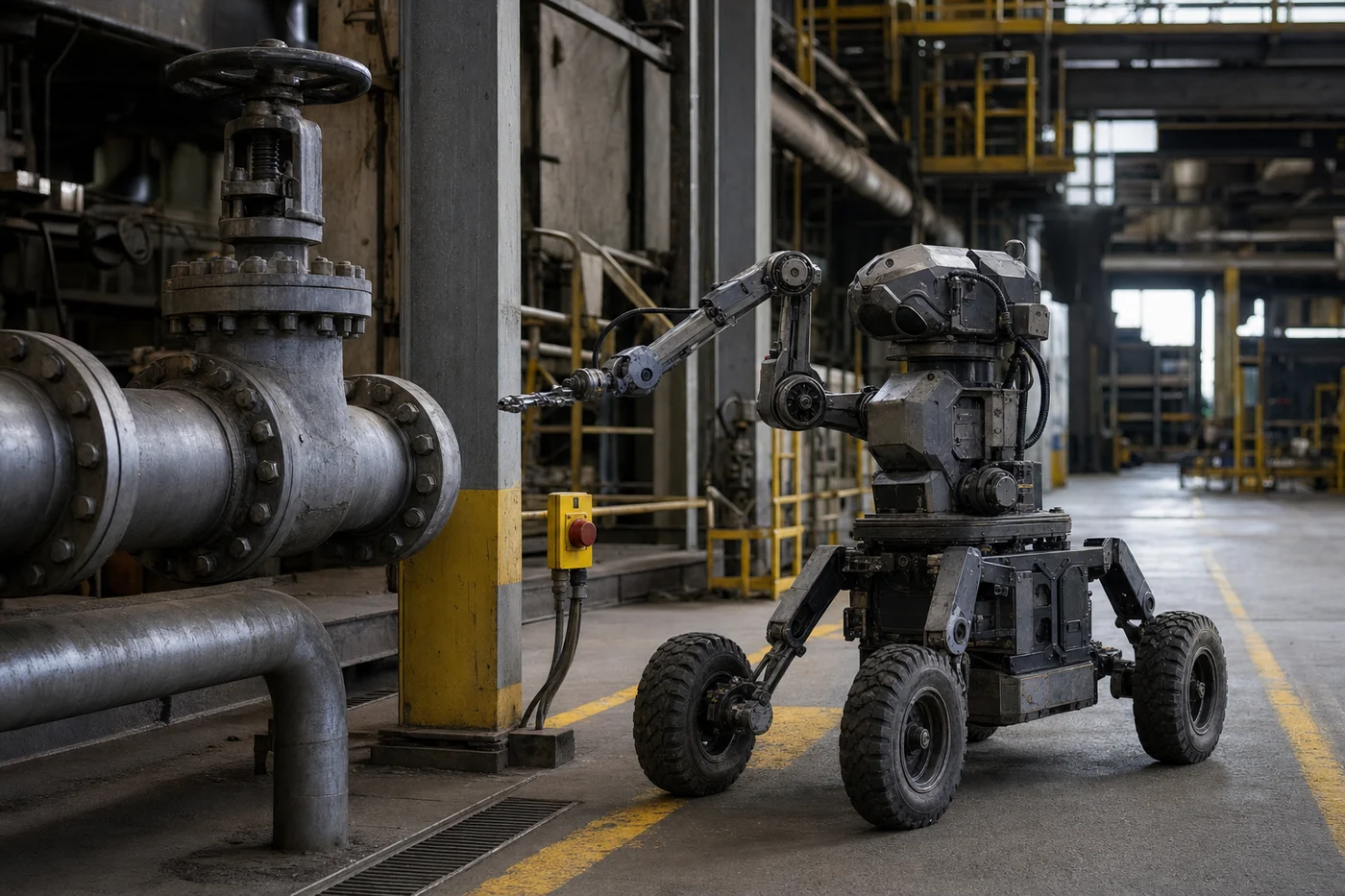
The same logic explains the wheel-leg hybrids. Run Robotics says its new machine combines a four-wheel all-terrain base with arms that can clear obstacles and operate equipment. The company describes average payloads of 100 to 120 kilograms and applications from steel plants to oilfields and radiation zones. Those are company claims, not independent field results. Still, the design question is the right one: what body makes this specific work less awkward?
Useful robots are becoming less theatrical
The show floor still had spectacle. There were robot dogs, boxing humanoids and a three-meter transformable machine people could ride. That is what draws a crowd.
The quieter signal was labor. Xinhua described robots routing cables, fitting headlamps and stacking batteries in a replica production line. Fourier showed a home robot retrieving a drink after hearing “I’m thirsty.” Ant Group assembled a pharmacy demonstration using robots from 20 companies. These examples range from staged exhibits to systems companies say are entering commercial use, so they should not be lumped together as proof of broad deployment.
Official Chinese data cited by Xinhua says industrial purchases of embodied-intelligence robots more than tripled from January through May 2026, while sector revenue rose 22.4 percent year over year. Those figures describe momentum, not reliability. A purchase order does not tell us how many hours the machine worked, how often a person rescued it or whether the job became calmer for anyone nearby.
But purchases do change the questions. A demo asks whether the robot can do the task once. A workplace asks who clears the aisle when it stops, how long the battery lasts under load, whether a technician can replace the wheel module and what happens to the part already in its hand. That is where impressive motion turns into useful equipment—or an expensive interruption.
Start with the floor, not the face
If you are trying to understand what industrial robots are useful for, ignore the personality for a minute. Look at the floor. Is it flat, wet, narrow, crowded or broken? Look at the work. Does the machine need fingers, force, reach, speed or simply a camera that can get close without sending a person into danger? Then look at the bad hour. Can it stop safely while carrying a load? Can someone move it out of the way? Does the site need a mechanic every time a sensor gets dirty?
A fixed arm can beat a humanoid when the same part arrives in the same place all day. Wheels can beat legs across a warehouse aisle. Four articulated wheels may make sense around rough industrial ground. A remote-controlled machine can be more honest than a supposedly independent one when the scene is rare, dangerous and difficult to model.
None of these choices is futuristic. They are normal equipment choices. That is the point. The robot becomes easier to trust when its shape admits what the job actually is.
Ren sees the body. Ivy sees the burden
Ren Ortiz likes the centaur shape because it makes the compromise visible. Wheels handle distance and payload. Articulated suspension handles rough ground. Arms handle equipment built for human hands. His caution is just as physical: a rescue robot should show what it is carrying, where it plans to put the next wheel and whether a person on site or a remote driver currently owns the move.
Ivy Chen is less interested in the silhouette than in the first month after purchase. Her test is whether the machine removes a dangerous or exhausting part of the job without turning a line lead into its full-time interpreter. If the buyer cannot name the task, the person who handles a stop and the maintenance hours created, the robot has not joined the team. It has joined the support queue.
Those views pull in different directions, usefully. Ren wants a machine built for the physical world. Ivy wants the surrounding work to get smaller. A successful industrial robot has to do both.
The least human robot may be the more respectful one
There is an odd promise hiding inside the humanoid pitch: the workplace does not have to change because the robot will squeeze itself into the human role. Sometimes that is efficient. Sometimes it preserves a bad layout, a heavy lift or a dangerous routine because changing the machine looks easier than changing the work.
A purpose-built robot can force a better conversation. Maybe the job should happen lower to the ground. Maybe the material should arrive in a different container. Maybe the dangerous inspection needs wheels, thermal sensors and a remote driver rather than a face and two feet. Maybe the worker should keep the judgment while the machine takes the heat, weight or repetition.
The useful question after WAIC is not how close robots are to becoming people. It is whether companies are getting better at building the right machine for the work people should not have to do alone.