
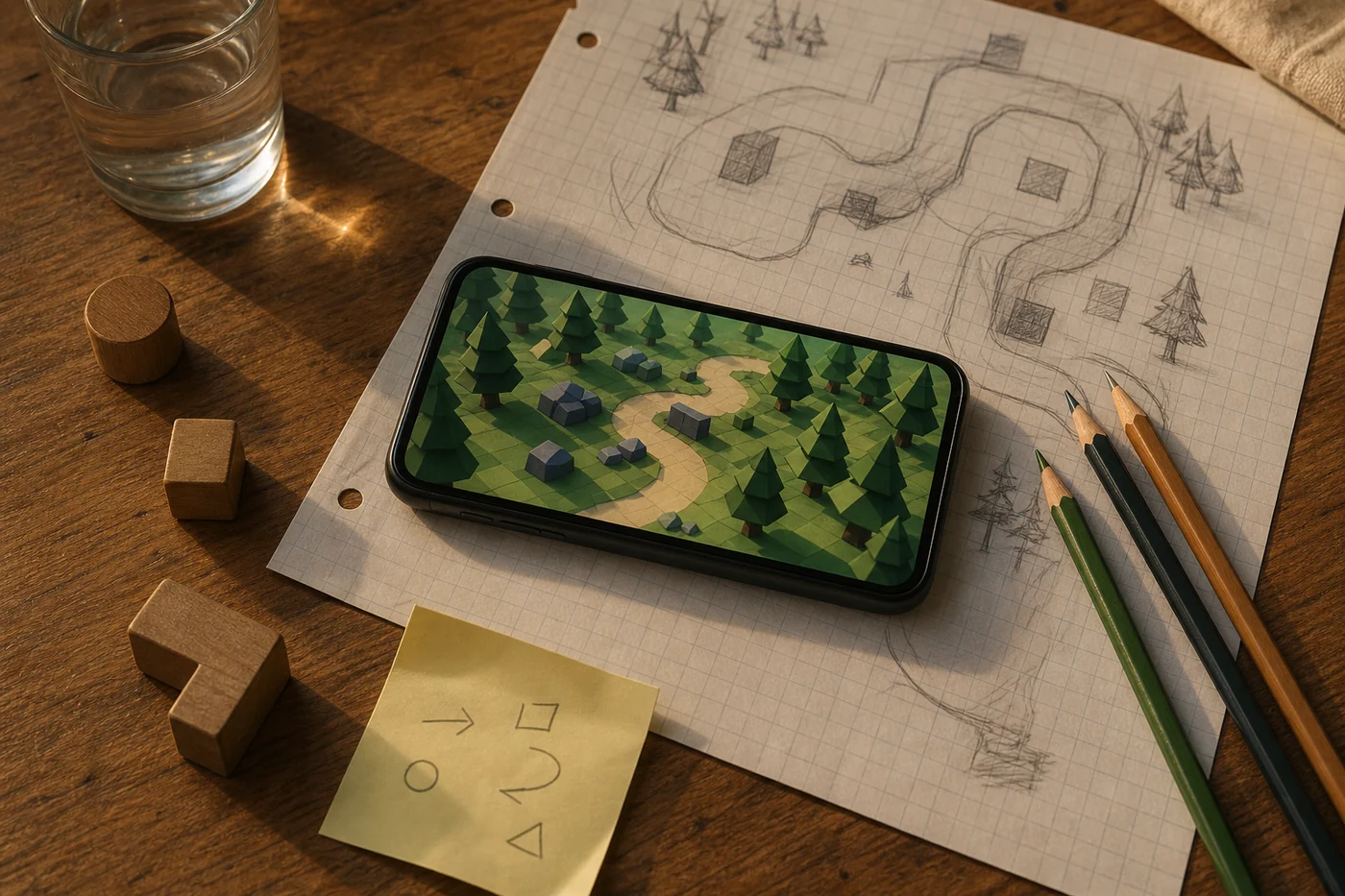
What Roblox Build actually does
Roblox says Build combines its own models with open-source models to generate gameplay mechanics, environments, characters, visual style and sound without leaving the mobile app. Projects share a back end and chat history with Roblox Studio, so a creator can start on a phone and continue on a desktop rather than throwing away the first draft.
The company is also preparing separate playtesting, analytics and experiment agents for Build and Studio. Those tools are planned for the coming months, not part of the initial promise that readers should treat as available today. Roblox has also announced procedural 3D models and a future scene-generation model, but again, future capability is not the same as a tested product in a child's hand.
The initial alpha is deliberately narrow. It starts in New Zealand on July 28. Build will be available to age-checked users nine and older, while games published from the alpha will first be available globally to age-checked users 16 and older after Roblox safety checks. A basic version will be free; paid options for power users have not been detailed.
The bottleneck moves from code to taste
Removing setup work is real progress. A child can test a maze, a shop, a silly obstacle course or a story idea before learning how every object is scripted. An adult who has always wanted to make a small game can get past the installation-and-tutorial weekend and reach the useful question: is this fun?
But easy generation also makes easy sameness. TechCrunch points to the concern that creators will compete with a flood of quickly generated, repetitive games. Roblox's answer is its existing discovery system: Build games enter the same candidate pool as other games and are ranked partly by long-term retention. In the company's blunt version, if nobody plays a game, nobody finds it.
Retention is a filter, not a definition of quality. It can reward a thoughtful game people return to. It can also reward compulsion, familiar loops and aggressive monetization. The creator still needs a better standard at the kitchen table: did my friend understand what to do, where did they get bored, and what did I change after watching them play?
Nine years old changes the safety question
Build is a creative tool inside a platform used heavily by children, so the age line is not a footnote. Roblox says alpha creators must be age-checked. Its newer Kids and Select account system places extra reviews around games available to users younger than 16, and lets parents manage screen time, spending, friends and access to specific games for younger accounts.
Those protections describe the publishing and playing environment. They do not yet answer every creation question. Roblox's launch post does not explain in detail how Build will handle copyrighted characters in prompts, unsafe generated mechanics, accidental spending hooks, or a young creator who does not understand why an idea was refused. Those are product questions to watch during the alpha, not proof that harm has occurred.
The cleanest test is whether the tool teaches judgment while it removes technical friction. A useful refusal should explain what needs changing. A publishing check should be understandable before a child spends hours polishing the game. Paid power features should not turn a first creative experiment into a quiet spending funnel.
Two different tests for the first draft
Jun Vega would sit beside a first-time creator and watch the second prompt. The generated forest is not the result; it is the moment when the child asks for a shorter path, a funnier enemy or a clearer goal. If changing one thing means fighting the whole scene, Build has replaced a coding wall with a prompting wall.
Cass Bell is less convinced by Roblox's discovery defense. A retention system can keep weak games off the front page, but it also tells creators which behavior the platform rewards. If the easiest route to visibility is another sticky loop, AI has made production cheaper without making the catalog more imaginative.
Both perspectives point toward a modest standard. Build succeeds if more people reach the part of game-making where they make choices, watch someone play, notice what failed and revise. The prompt should shorten the walk to that work, not pretend the work is finished.
What to watch when the alpha opens
Do not grade Build by the prettiest one-shot demo. Watch what happens after generation. Can a beginner change one mechanic without breaking three others? Can they see which assets, rules and sounds the AI added? Does a failed playtest lead to a specific fix? Can a project move cleanly from phone to Studio?
For parents, the useful questions are equally plain: what can a nine-year-old publish, who can play it, where can money be spent, and what happens when the system refuses a request? For creators, watch whether the free version is enough to learn and whether paid features buy depth rather than merely more generations.
Roblox may be putting a real game-making doorway on the device people already have in their pocket. The evidence arrives when new creators walk through it and start making decisions of their own.