
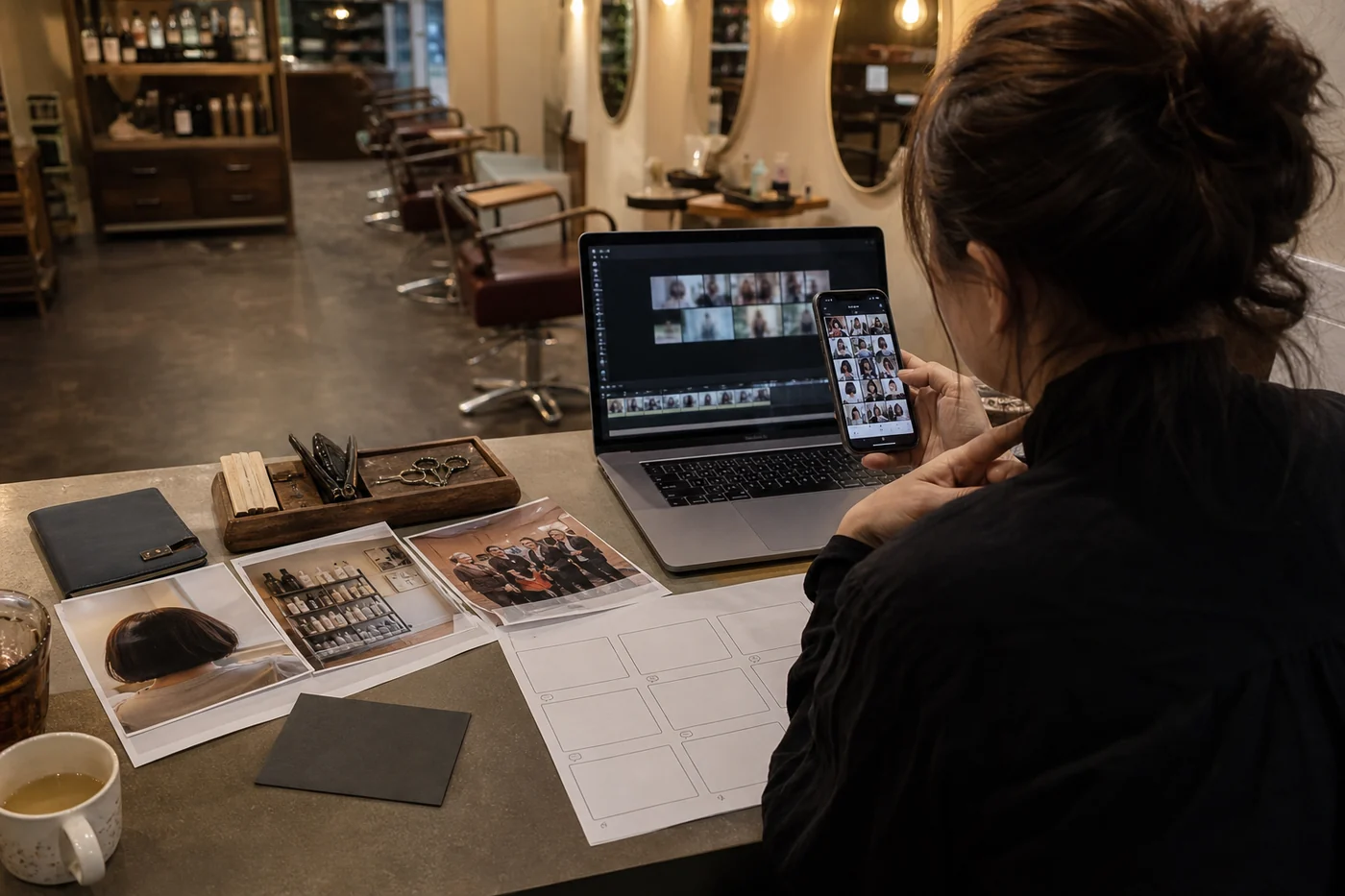
What Reelful actually does
Reelful is currently available on iPhone. Its App Store listing says the app can take a prompt plus selected photos and videos, draft the structure, write narration, create captions, choose music and effects, and assemble the result. The company site says you can review the plan, ask for changes, fine-tune the timeline and export the finished video.
TechCrunch reports that users can record a thirty-second sample for a voice clone. The app can also animate still images into generated video, and those generated clips carry a watermark. That distinction matters: trimming a real clip is editing; making a still photo appear to move creates something that did not happen exactly as shown.
Pricing starts at $24.99 a month for about ten videos, with higher tiers for roughly twenty-five or sixty. That makes the practical comparison less dramatic than 'AI versus an editor.' It is closer to an evening of your own time versus a tool that prepares a usable first cut.
The blank timeline disappeared. The judgment did not
For a travel recap, the stakes may be low. For a salon transformation, a family milestone or a product demo, the AI is handling people, claims and context. A smooth script can still put the wrong words in your cloned voice. An animated photo can imply motion that was never recorded. A good-looking cut can include someone who never agreed to become marketing material.
Reelful's privacy policy says uploaded photos, videos, prompts, generated projects and an optional voice sample are processed to provide the service. It names third-party providers for voice cloning, image animation, script generation, storage, backend operations and analytics. Projects and videos are kept until you delete them or the account; voice recordings are retained to maintain the clone. The policy also says users can request deletion and remove a voice clone.
That is more useful than vague privacy copy, but it still leaves a job for the user. Make a dedicated album containing only the clips needed for this video. If customers, friends or children appear, confirm they are meant to be in the published cut. Delete the project and voice clone when you no longer want the service to hold them.
Run the one-video test before buying the habit
Pick one finished event: a market stall, workshop, haircut, open house or weekend trip. Put ten to twenty approved photos and clips in a separate album. Ask for one thirty-second video. Then review it without sound, with sound, and once with the original media beside it.
Look for four things. Did it invent an action by animating a still? Did the script make a claim you would not say yourself? Did the crop or sequence make another person the subject of the story? Can you change one sentence, remove one shot and keep the rest without rebuilding the video? Those checks take minutes and tell you more than a polished sample reel.
Disclosure is part of the export, not cleanup for later. YouTube requires creators to disclose realistic content that was generated or meaningfully altered with AI, including realistic scenes that did not occur. Reelful's watermark is a useful start for generated clips, but the person posting the final video still owns the platform settings, caption and context.
Two views on who should make the first cut
Sable Quinn would draw the line at selection. A camera roll is a private archive before it is raw material, so the product should earn trust by making exclusion easy: choose a small album, mark the synthetic shots, and keep everything else out of reach.
Ivy Chen would test the business handoff. If a salon employee can prepare the reel but the owner and featured customer can approve faces, claims and the final caption in one pass, the tool may remove a real evening chore. If approval happens through screenshots and scattered messages, the edit got faster while the team got messier.
Both are right. The useful version of automatic video editing does not make every memory publishable. It gives a person a fast first cut and leaves the consequential choices obvious, small and reversible.