
What the launch actually says
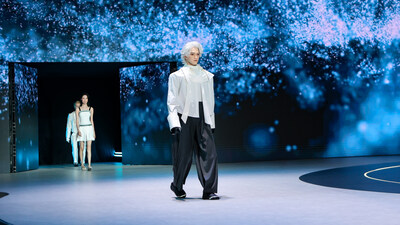
UBTECH says the UWORLD U1 series has 88 degrees of freedom, a dual-pivot biomimetic cervical spine, speech-to-lip synchronization within 20 milliseconds, and an emotion-aware large language model that can recognize more than 20 emotional states with accuracy above 90%. It also describes an Agent Memory OS for long-term companionship and a proactive care engine that can respond to contextual cues.
The company also says users retain ownership of their data through a three-layer privacy setup: local-first processing, minimal cloud dependency, and user-controlled hardware safeguards. Those are the right categories to ask about. They are not the end of the question.
The most sensitive detail may be the donated-robot program. UBTECH says it plans to donate 100 customized U1 units in 2026 for psychological support, including units with 3D facial reconstruction and voiceprint-based identity replication. If that works badly, it is creepy. If it works well, it is still emotionally heavy. Either way, memory and consent cannot be an afterthought.
Memory is the product test
Most robot coverage still starts with motion: how tall, how fast, how many degrees of freedom, how human the face looks. For companion robots, the harder test is memory behavior.
If the robot thinks someone is sad, who sees that label? Does it expire? Can the person correct it without opening an owner-only app? Does the robot remember a guest, a child, a patient, or a worker differently from the person who bought it? If a caregiver asks why the robot flagged a mood change, does the system show the original signal or only a confident summary?
This is where local-first storage helps but does not settle the issue. A private record can still be misused by the person with the account. A local inference can still be wrong. A hardware safeguard can still be invisible to the guest standing in the room.
Public robots make this less theoretical
AGIBOT's UK announcement points to another path: humanoids rented into education, exhibitions, retail, guided service, logistics, and public-facing commercial spaces. In that model, most people near the robot are not owners. They are visitors, students, staff, customers, or passersby.
That matters because the permission model changes. The person affected by the robot may not be the person who configured it. For an AI assistant in a browser, you can usually close the tab. For a humanoid in a lobby, shop, school, or care home, the opt-out needs to exist in the room.
A boring checklist before the cute demo
Before calling a companion robot useful, ask four plain questions.
First: what did it infer about me? Second: who can see that inference? Third: when does it expire? Fourth: how do I correct or delete it without negotiating with the person who owns the account?
A robot that can answer those questions calmly is much more interesting than a robot that only smiles naturally. Emotional intelligence without memory discipline is not care. It is a diary someone else can open.